
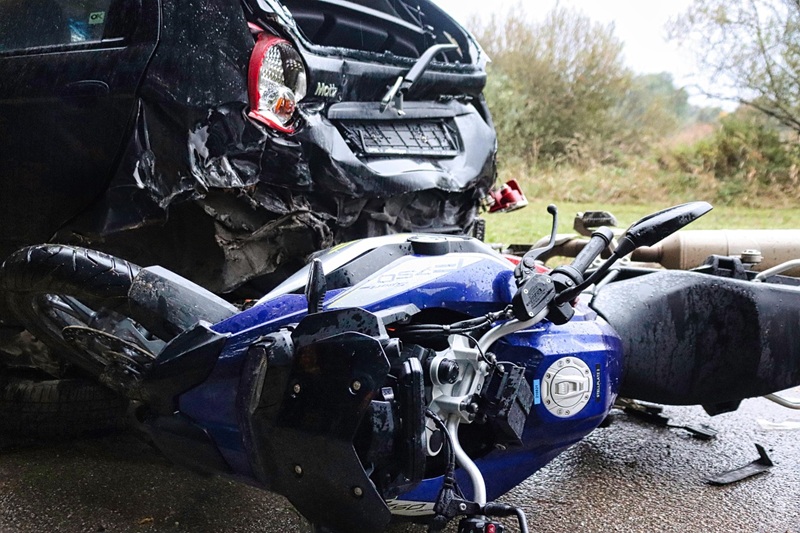
Motorcycle crashes can result in serious injuries, expensive medical treatment, motorcycle damage, and time away from work. Understanding Motorcycle Accident Claims can help an injured rider recognize the important steps involved in documenting a crash, dealing with insurance companies, evaluating compensation, and understanding potential legal options. Because insurance requirements, negligence rules, and filing deadlines vary between states, the process can be different depending on where the accident occurred.
This guide explains the general principles that apply to motorcycle accident cases in the United States.
What Is a Motorcycle Accident Claim?
A motorcycle accident claim is a legal or insurance claim seeking compensation for losses resulting from a motorcycle collision.
Depending on the circumstances, a claim may involve:
- Motorcycle repair or replacement costs.
- Emergency medical expenses.
- Hospital and rehabilitation bills.
- Lost wages.
- Reduced earning capacity.
- Pain and suffering.
- Property damage.
- Other legally recognized losses.
A claim may be made against an at-fault driver’s insurance company, the rider’s own insurer, another responsible party, or multiple parties depending on the facts.
Not every motorcycle crash results in a lawsuit. Some claims are resolved through insurance negotiations, while others may require litigation.
Why Are Motorcycle Accidents Often Serious?
Motorcycles provide substantially less physical protection than passenger vehicles. A rider generally does not have the same protective structure provided by a car, such as a surrounding passenger compartment, seat belts, or airbags.
Federal traffic-safety data illustrates the risks associated with motorcycle crashes.
The National Highway Traffic Safety Administration reported that 6,218 motorcyclists were killed in traffic crashes in 2022, accounting for approximately 14% of all traffic fatalities that year. NHTSA also reported that motorcyclists were significantly more likely to be killed or injured in crashes than passenger-car occupants when measured by vehicle miles traveled. (nhtsa.gov)
These statistics concern traffic safety rather than insurance claims, but they demonstrate why motorcycle crashes can result in substantial physical and financial consequences.
What Should You Do Immediately After a Motorcycle Crash?
The first priority after any collision should be safety and appropriate medical attention.
1. Get Medical Help
Call 911 if anyone has serious injuries or requires emergency assistance.
Even when an injury initially appears minor, medical evaluation can be important. Some injuries may not become obvious immediately after a crash.
Medical records can also help document:
- The date of treatment.
- The reported symptoms.
- Diagnosed injuries.
- Treatment recommendations.
- Medication.
- Follow-up care.
- Rehabilitation.
2. Report the Accident
Depending on the circumstances and state requirements, you may need to report the collision to law enforcement.
A police report can provide an important record of the crash, including information about the location, vehicles involved, statements, and circumstances observed by responding officers.
3. Exchange Information
If you are physically able to do so, obtain information from the other driver, including:
- Name.
- Contact information.
- Driver’s license details.
- License plate number.
- Insurance information.
- Vehicle make and model.
Also collect contact information from witnesses when possible.
4. Photograph the Accident Scene
Photographs can preserve evidence that may later become difficult to obtain.
Consider photographing:
- Damage to the motorcycle.
- Damage to other vehicles.
- Road conditions.
- Traffic signs and signals.
- Skid marks.
- Debris.
- Visible injuries.
- The surrounding area.
- Your helmet and protective equipment.
Do not put yourself in danger to take photographs.
How Is Fault Determined in a Motorcycle Accident?
Determining who was legally responsible is one of the central issues in many Motorcycle Accident Claims.
A claim may involve negligence when another person’s failure to use reasonable care contributed to the collision.
Examples can include:
- Speeding.
- Distracted driving.
- Failure to yield.
- Unsafe lane changes.
- Following too closely.
- Driving under the influence.
- Running a red light.
- Failing to notice a motorcycle.
- Making an unsafe turn.
However, responsibility is not always straightforward.
Evidence may include police reports, photographs, witness statements, traffic-camera footage, motorcycle or vehicle damage, surveillance video, and accident reconstruction analysis.
Can a Motorcycle Rider Be Partly at Fault?
Yes, depending on state law.
Some states use comparative negligence or related rules under which an injured person’s recovery can be reduced if that person is found partly responsible for the accident.
For example, if a court determines that both parties contributed to a collision, the amount recoverable by the injured party may be affected by the applicable comparative-fault rules.
The specific rules differ considerably among states. Some jurisdictions use modified comparative negligence, some use other approaches, and a few states retain different forms of contributory negligence.
Because the effect of partial responsibility can be significant, the law of the state where the accident occurred must be considered.
What Evidence Can Support a Motorcycle Accident Claim?
Strong evidence can make it easier to establish how the crash occurred and document the resulting losses.
Potential evidence includes:
Police Reports
The responding officer’s report may contain information about the collision, parties, statements, citations, and observations.
Photographs and Video
Images can help show road conditions, vehicle positions, motorcycle damage, injuries, and other details.
Medical Records
Medical documentation can establish the nature and extent of injuries and the treatment required.
Witness Statements
Independent witnesses may provide information about what happened immediately before and during the collision.
Dash cam or Surveillance Footage
Video can sometimes provide direct evidence concerning traffic signals, vehicle movements, speed, or other circumstances.
Employment Records
Pay statements, tax records, employer documentation, and other evidence can help establish lost income when an injury prevents someone from working.
Motorcycle Repair Records
Repair estimates, photographs, invoices, and damage assessments can document property losses.
How Does Motorcycle Insurance Work?
Insurance coverage is an important part of Motorcycle Accident Claims, but coverage varies according to the policy and state law.
Potentially relevant coverage can include:
Liability Insurance
Liability coverage generally protects an insured person against covered claims arising from legal responsibility for injuries or property damage caused to others, subject to policy limits and exclusions.
Collision Coverage
Collision coverage may pay for damage to the insured motorcycle resulting from a covered collision, subject to the policy’s deductible and terms.
Comprehensive Coverage
Comprehensive coverage can apply to certain non-collision losses, such as theft, vandalism, or specified weather-related damage.
Uninsured Motorist Coverage
This coverage can potentially provide protection when the responsible driver has no insurance, depending on the policy and state requirements.
Underinsured Motorist Coverage
Underinsured motorist coverage may apply when the at-fault driver’s insurance limits are insufficient to cover certain losses.
Motorcycle policies can contain important differences from standard automobile policies, including coverage limits, exclusions, equipment coverage, and requirements concerning safety equipment.
Reviewing the actual policy is therefore important.
What Compensation May Be Available?
The potential value of a claim depends on the circumstances, applicable law, available insurance, and evidence of losses.
Possible categories of compensation include:
Medical Expenses
This may include emergency care, hospitalization, surgery, medication, physical therapy, rehabilitation, and other necessary treatment.
Lost Income
An injured rider may be able to seek compensation for income lost because of time away from work, subject to applicable law.
Future Earning Losses
A serious permanent injury can affect someone’s future ability to work. Evidence regarding employment, income, education, medical prognosis, and earning capacity may become relevant.
Motorcycle Damage
Repair or replacement costs may be recoverable when another party is legally responsible for the property damage.
Pain and Suffering
Depending on state law, compensation may be available for physical pain, emotional distress, loss of enjoyment of life, and other non-economic harm.
Permanent Disability or Disfigurement
Serious motorcycle injuries can sometimes cause long-term disability, scarring, or disfigurement. These consequences may be relevant when evaluating damages under applicable law.
Research Data on Motorcycle Safety
Research from NHTSA provides important context for motorcycle injury claims.
In its 2024 Motorcycle Safety Awareness Month materials, NHTSA reported that 6,335 motorcyclists were killed in traffic crashes in 2023, representing about 15% of all traffic fatalities. The agency also estimated that 82,564 motorcyclists were injured in crashes during 2023. The release was issued in May 2024, before the requested June 14, 2024 publication date. (nhtsa.gov)
NHTSA also reported that 41% of riders killed in single-vehicle crashes in 2023 were alcohol-impaired. Among known helmet-use data, 51% of motorcyclists killed in states without universal helmet laws were not wearing helmets, compared with 10% in states with universal helmet laws. (nhtsa.gov)
Research source: National Highway Traffic Safety Administration – Motorcycle Safety Awareness Month
These statistics describe national traffic-safety trends and should not be interpreted as evidence that a particular motorcycle accident was caused by a particular factor.
What If the Other Driver Says the Motorcycle Rider Caused the Crash?
A statement by another driver does not necessarily determine legal responsibility.
Liability is generally evaluated using the evidence and applicable law. Relevant evidence may include:
- Police findings.
- Witness accounts.
- Video footage.
- Vehicle damage.
- Road markings.
- Traffic signals.
- Expert analysis.
- Statements from the parties.
A motorcycle rider should avoid making unsupported statements about fault. Provide accurate information and allow the available evidence to establish what occurred.
Should You Speak With the Other Driver’s Insurance Company?
You may be contacted by an insurance adjuster after a crash.
An adjuster may ask questions about:
- How the accident happened.
- Your injuries.
- Medical treatment.
- Your employment.
- Property damage.
- Other insurance coverage.
It is important to provide truthful information, but an injured person should understand what they are agreeing to before signing documents or providing a recorded statement.
For serious injuries or disputed liability, consulting a qualified attorney before making significant decisions about the claim can help clarify the process.
How Long Do You Have to File a Motorcycle Accident Lawsuit?
There is no nationwide deadline that applies to every motorcycle accident case.
Each state has its own statute of limitations, and the deadline can depend on the type of claim and the parties involved.
For example, different rules may apply when:
- A person dies in the accident.
- A government entity is involved.
- The injured person is a minor.
- The injury was not immediately discovered.
- A product defect contributed to the crash.
Some states also impose specific notice requirements for claims against government entities.
Because missing a filing deadline can affect the right to pursue a lawsuit, potential claimants should determine the applicable state deadline as early as possible.
Common Mistakes After a Motorcycle Accident
Several mistakes can complicate an otherwise legitimate claim.
Not Seeking Medical Attention
Ignoring symptoms can make it harder to document the timing and extent of an injury.
Failing to Preserve Evidence
Motorcycle damage, helmets, riding gear, photographs, and other physical evidence may become important later.
Posting About the Crash Online
Social-media posts can potentially be used in a legal dispute. Avoid posting speculation about fault, injuries, or the accident.
Accepting a Settlement Too Quickly
An early settlement may not account for future medical treatment or other losses when the full extent of an injury is not yet known.
Missing a Legal Deadline
A claim may be affected if the applicable statute of limitations expires.
Assuming the Other Driver Is Automatically Responsible
Even when a driver appears to have caused the collision, liability should be evaluated based on evidence and applicable law.
Frequently Asked Questions About Motorcycle Accident Claims
1. Do motorcycle accident claims work differently from car accident claims?
The basic insurance and negligence concepts can be similar, but motorcycle crashes may involve additional issues concerning protective equipment, motorcycle-specific insurance, visibility, road conditions, and the severity of injuries. State law still determines many important aspects of a claim.
2. Can I make a claim if I was not wearing a helmet?
Potentially, but the answer depends heavily on state law and the circumstances. Helmet-use requirements and the effect of noncompliance on injury claims vary by jurisdiction.
3. What if the driver who hit me was uninsured?
Depending on the state and your insurance policy, uninsured motorist coverage may provide a potential source of compensation. Other legal options may also exist.
4. Can I recover damages if I was partly responsible?
Possibly. The outcome depends on the state’s negligence rules and the percentage of responsibility assigned to each party.
5. How long does a motorcycle accident claim take?
There is no fixed timeline. A straightforward property-damage claim may resolve relatively quickly, while serious injuries, disputed liability, multiple insurers, or litigation can extend the process considerably.
6. Should I hire an attorney after a motorcycle crash?
Not every accident requires an attorney. Legal representation may be particularly useful when there are serious injuries, disputed liability, significant financial losses, an insurance denial, or complex insurance issues.
7. What should I do if the insurance company offers a settlement?
Before accepting a settlement, consider whether it accounts for known medical expenses, future treatment, lost income, property damage, and other applicable losses. A settlement can have legal consequences, so serious injury claims may warrant professional legal advice before an agreement is signed.
Final Thoughts
Motorcycle Accident Claims can involve much more than repairing a damaged bike. Injuries, medical expenses, lost income, insurance coverage, liability, and state-specific filing deadlines can all affect the legal and financial outcome.
After a crash, prioritize safety and medical care, report the accident when required, document the scene, preserve evidence, notify the appropriate insurer, and keep records of your expenses and treatment. When injuries are serious or fault and compensation are disputed, a qualified attorney can explain the options available under the law of the relevant state.
The most important point is that every accident is different. General information can help you understand the process, but the specific facts, insurance policies, and laws governing the accident will determine what legal options may be available.
Note: This article is for general informational purposes only and does not constitute legal advice. Motorcycle accident laws, insurance requirements, comparative-fault rules, damages, and statutes of limitations vary by state. Anyone involved in a specific accident should consult a licensed attorney in the appropriate jurisdiction.