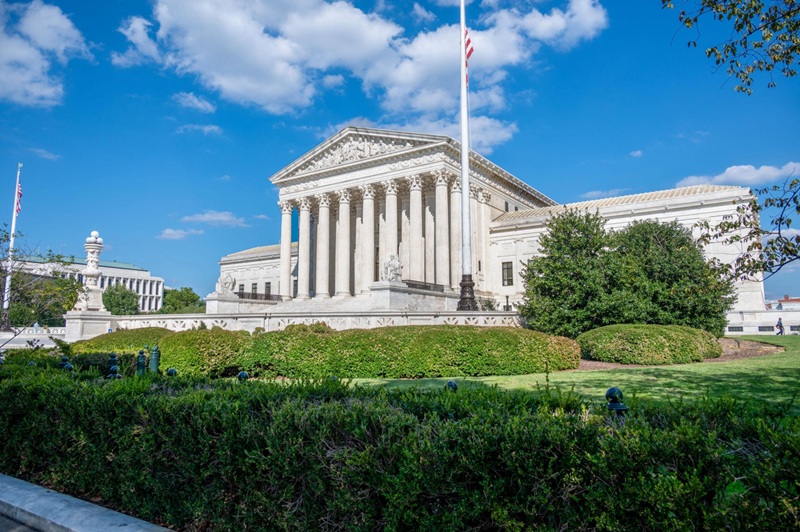
The U.S. Supreme Court issued several landmark rulings during 2023 that reshaped higher education, federal government authority, religious freedom, election law, and constitutional rights. These decisions continue to influence public policy, business operations, educational institutions, and government agencies as 2024 begins.
Below is a breakdown of the most important Supreme Court decisions through February 1, 2024, and what they mean for Americans.
1. Students for Fair Admissions v. Harvard and University of North Carolina
Perhaps the most widely discussed Supreme Court ruling of 2023 involved affirmative action in college admissions. The Court held that the admissions policies used by Harvard University and the University of North Carolina violated the Equal Protection Clause because they considered race as a factor in admissions decisions. The ruling effectively ended race-conscious admissions programs at most colleges and universities across the United States.
Why It Matters
- Ends traditional affirmative action programs in higher education.
- Forces colleges to redesign admissions processes.
- Influences diversity, equity, and inclusion policies nationwide.
Case Study: Universities Respond to the Affirmative Action Ruling
Following the Supreme Court’s decision in Students for Fair Admissions v. Harvard and UNC, colleges nationwide began reevaluating their admissions policies. Several institutions announced plans to place greater emphasis on essays, socioeconomic background, and personal experiences rather than race-based considerations.
According to the National Center for Education Statistics (NCES), approximately 19 million students were enrolled in degree-granting postsecondary institutions during the 2023–2024 academic year, illustrating the broad reach of the Court’s decision across higher education.
Referral:
National Center for Education Statistics (NCES)
2. Biden v. Nebraska: Student Loan Forgiveness Blocked
In a major decision affecting millions of borrowers, the Supreme Court struck down the Biden Administration’s student loan forgiveness program. The Court concluded that the executive branch lacked clear congressional authorization to cancel hundreds of billions of dollars in federal student loan debt under the HEROES Act.
Impact
- Student loan balances remained in place for eligible borrowers.
- Reinforced limits on executive agency authority.
- Increased focus on congressional approval for major economic programs.
Data Snapshot: Student Loan Debt After Biden v. Nebraska
The Supreme Court’s ruling in Biden v. Nebraska halted a student loan forgiveness plan affecting millions of borrowers. By early 2024, Federal Reserve data showed that total outstanding student loan debt in the United States had risen to approximately $1.75 trillion, making student loans the nation’s second-largest category of consumer debt after mortgages.
The decision also coincided with the resumption of federal student loan payments after more than three years of pandemic-related payment pauses.
Federal Reserve Household Debt and Credit Report
3. 303 Creative LLC v. Elenis
The Court ruled that a Colorado website designer could not be compelled by the government to create expressive content that conflicted with her sincerely held beliefs. The decision was based on First Amendment free speech protections rather than broader discrimination laws.
Key Takeaways
- Strengthens constitutional protections for expressive businesses.
- Expands free speech arguments in commercial settings.
- Raises ongoing questions about balancing anti-discrimination laws and constitutional rights.
4. Moore v. Harper
The Supreme Court rejected the so-called “independent state legislature theory,” which argued that state legislatures possess nearly exclusive authority over federal election rules. Instead, the Court confirmed that state courts may review election laws enacted by legislatures under state constitutions.
Significance
- Preserves judicial oversight of election laws.
- Reinforces existing checks and balances within state governments.
- Influences future election-related litigation.
5. Groff v. DeJoy
In this religious accommodation case, the Court strengthened protections for employees seeking workplace accommodations based on religious beliefs. The ruling clarified that employers must demonstrate a substantial burden before denying a religious accommodation request.
Effects on Employers
- Higher obligations to accommodate religious practices.
- Potential revisions to workplace policies.
- Increased attention to employment discrimination compliance.
Employment Impact Following Groff v. DeJoy
The Supreme Court’s decision in Groff v. DeJoy prompted employers and legal professionals to reassess workplace religious accommodation policies. Increased attention was given to documenting undue hardship and complying with Title VII requirements.
The U.S. Equal Employment Opportunity Commission (EEOC) reported receiving 81,055 discrimination charges during fiscal year 2023, representing a 10% increase from the previous year. The agency also filed lawsuits involving religious accommodation issues, highlighting the continued importance of workplace compliance.
Referral:
U.S. Equal Employment Opportunity Commission (EEOC) 2023 Annual Performance Report
6. Counterman v. Colorado
The Court addressed the constitutional limits of criminalizing threatening speech. The justices ruled that prosecutors must generally show some level of subjective awareness or recklessness when pursuing criminal charges for alleged threats.
Why This Matters
- Clarifies First Amendment protections.
- Balances free speech rights with public safety concerns.
- Influences future online harassment and threat-related cases.
7. Sackett v. Environmental Protection Agency
The Court significantly narrowed federal authority under the Clean Water Act by limiting which wetlands qualify as federally regulated waters. The decision affects environmental regulation, land development, and property rights across the country.
Potential Impact
- Reduced federal oversight of certain wetlands.
- Greater authority for states regarding environmental regulation.
- Significant consequences for developers and landowners.
8. Allen v. Milligan
In a major voting rights case, the Supreme Court upheld a lower court ruling requiring Alabama to redraw congressional districts to comply with the Voting Rights Act. The decision preserved key protections against racial vote dilution.
Importance
- Reinforces protections under the Voting Rights Act.
- Affects congressional redistricting nationwide.
- Influences future voting rights litigation.
Common Themes in Recent Supreme Court Decisions
Several trends emerged from the Court’s recent rulings:
Greater Scrutiny of Government Authority
The Court increasingly examined whether federal agencies and executive branch officials possess clear authority to implement major policies.
Expanded Constitutional Protections
Many decisions emphasized First Amendment rights, religious liberty protections, and limits on government action.
Significant Impact on Education and Employment
Higher education institutions and employers faced some of the most immediate effects from recent Supreme Court rulings.
Continued Focus on Election Law
Voting rights and election administration remain central constitutional issues before the Court.
What to Watch in 2024
As of February 1, 2024, the Supreme Court is considering several major cases involving:
- Administrative agency authority.
- Social media regulation.
- Firearm restrictions.
- Securities enforcement.
- Presidential powers.
- Federal election issues.
Many legal analysts expect these cases to have significant constitutional and regulatory consequences in the months ahead.
Conclusion
Through February 1, 2024, the Supreme Court issued decisions that reshaped affirmative action, student loan policy, religious accommodations, environmental regulation, voting rights, and free speech protections. These rulings continue to influence legal strategy, public policy, and government operations throughout the United States. Understanding these landmark decisions helps individuals, businesses, educational institutions, and policymakers anticipate future legal developments and adapt to a rapidly evolving legal landscape.