
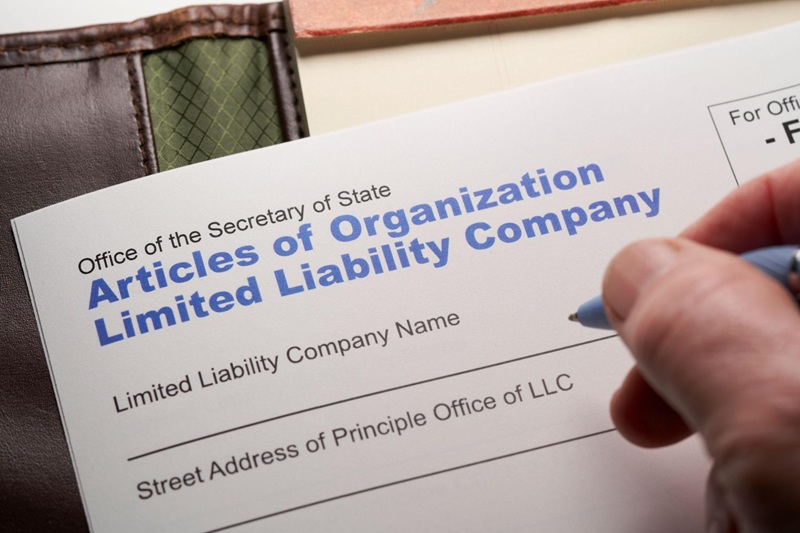
Starting a business involves many important decisions, and one of the most common choices for entrepreneurs is forming a Limited Liability Company (LLC). If you’re wondering How to Form an LLC, understanding the process can help you establish a legally recognized business while protecting your personal assets.
As of February 2024, LLCs remain one of the most popular business structures in the United States due to their flexibility, liability protection, and relatively simple compliance requirements. Whether you’re launching a small business, consulting practice, online store, or family-owned company, an LLC may offer significant advantages.
What Is an LLC?
A Limited Liability Company (LLC) is a business structure that combines features of both corporations and partnerships.
An LLC generally provides:
- Personal liability protection for owners.
- Flexible management options.
- Simplified business operations.
- Pass-through taxation by default.
Owners of an LLC are known as members and may consist of one individual or multiple individuals and entities.
Business Formation Continues to Reach Historic Levels
Entrepreneurship has remained strong in the United States in recent years. According to the U.S. Census Bureau, millions of new business applications are filed annually, reflecting continued interest in launching startups and small businesses.
- 2023: More than 5.5 million new business applications were filed nationwide.
- 2024: Business formation remained elevated, particularly in professional services, e-commerce, construction, healthcare, and technology sectors.
Because many first-time entrepreneurs prioritize flexibility and liability protection, LLCs continue to be one of the most commonly selected business structures.
Referral Sources
- U.S. Census Bureau – Business Formation Statistics
https://www.census.gov/econ/bfs/- SBA Office of Advocacy
https://advocacy.sba.gov/
Entrepreneurship Continues to Grow Across the United States
Business creation remained resilient throughout 2024, following record-setting application volumes in recent years. According to the U.S. Census Bureau, entrepreneurs continued to submit millions of applications for new businesses across industries such as retail, professional services, healthcare, logistics, and technology.
Year Business Applications 2023 More than 5.5 million applications filed 2024 Business formation remained above pre-pandemic averages, with continued growth in service-based and online businesses These trends suggest that LLCs remain one of the preferred entity choices for entrepreneurs seeking liability protection and operational flexibility.
Referral Sources
- U.S. Census Bureau – Business Formation Statistics
https://www.census.gov/econ/bfs/- SBA Office of Advocacy
https://advocacy.sba.gov/
Why Choose an LLC?
Many entrepreneurs choose LLCs because they offer a balance between legal protection and operational flexibility.
Common benefits include:
Limited Personal Liability
Members are generally protected from personal responsibility for business debts and obligations.
Tax Flexibility
Most LLCs benefit from pass-through taxation, meaning profits and losses are reported on members’ individual tax returns.
Simplified Administration
Compared with corporations, LLCs typically require fewer formal meetings and governance procedures.
Credibility
Operating as an LLC can enhance a business’s professional image with customers, vendors, and lenders.
Small Businesses Play a Critical Role in the U.S. Economy
According to the U.S. Small Business Administration (SBA):
- Small businesses represent 99.9% of all U.S. businesses.
- They employ approximately 46% of the private-sector workforce.
- They account for a significant share of new job creation each year.
These statistics underscore why selecting the right legal structure is one of the first and most important decisions for entrepreneurs.
Referral Sources
- SBA Office of Advocacy:
https://advocacy.sba.gov/- U.S. Small Business Administration:
https://www.sba.gov/
Step 1: Choose a Business Name
The first step in forming an LLC is selecting a business name.
Most states require the name to:
- Be distinguishable from existing businesses.
- Include “Limited Liability Company” or an approved abbreviation such as “LLC”.
- Comply with state naming rules.
Before filing formation documents, entrepreneurs should verify name availability through the appropriate state business registry.
Step 2: Select the State of Formation
Many small businesses choose to form an LLC in the state where they primarily operate.
Factors to consider include:
- Filing fees.
- Annual reporting requirements.
- State taxes.
- Regulatory obligations.
While some businesses explore formation in states known for business-friendly laws, operating in another state may still require additional registrations.
Case Study: Forming an LLC in Your Home State vs. Another State
Many entrepreneurs consider forming an LLC in states such as Delaware, Wyoming, or Nevada because of their business-friendly laws. However, if a business primarily operates in another state, it may still need to register there as a foreign LLC and comply with additional filing, tax, and reporting requirements.
For many small businesses, forming the LLC in the state where operations are primarily conducted may reduce administrative complexity and ongoing compliance costs.
Referral Sources
- SBA – Choose Your Business Location:
https://www.sba.gov/business-guide/launch-your-business/choose-your-business-location- Delaware Division of Corporations:
https://corp.delaware.gov/
Step 3: Designate a Registered Agent
Most states require LLCs to appoint a registered agent.
A registered agent is responsible for receiving:
- Legal notices.
- Government correspondence.
- Service of process documents.
The registered agent generally must maintain a physical address in the state of formation.
Step 4: File Formation Documents
To officially create an LLC, entrepreneurs typically file formation documents with the appropriate state agency.
These documents are often called:
- Articles of Organization.
- Certificate of Organization.
- Certificate of Formation.
Required information may include:
- Business name.
- Principal business address.
- Registered agent information.
- Management structure.
Approval by the state generally establishes the LLC as a legal entity.
LLC Filing Fees Vary by State
LLC formation costs differ depending on the state. Filing fees generally range from under $100 to several hundred dollars, and some states also require annual report fees or franchise taxes.
Entrepreneurs should review the filing requirements and ongoing compliance costs in the state where they plan to form their LLC before submitting formation documents.
Referral Sources
- National Association of Secretaries of State:
https://www.nass.org/- SBA:
https://www.sba.gov/
Step 5: Create an Operating Agreement
Although not always legally required, an operating agreement is highly recommended.
This document typically outlines:
- Ownership percentages.
- Member responsibilities.
- Voting rights.
- Profit distribution procedures.
- Management authority.
An operating agreement can help prevent disputes and clarify expectations among members.
Research Highlights the Value of Operating Agreements
Although not required in every state, legal professionals widely recommend that LLCs adopt a written operating agreement. A well-drafted agreement helps clarify ownership rights, management responsibilities, voting procedures, and profit distributions, reducing the likelihood of disputes among members.
Single-member LLCs may also benefit from maintaining an operating agreement to demonstrate the separation between personal and business affairs.
Referral Sources
- SBA:
https://www.sba.gov/- American Bar Association:
https://www.americanbar.org/
Step 6: Obtain an Employer Identification Number (EIN)
Many LLCs need an Employer Identification Number (EIN) for tax and business purposes.
An EIN is commonly required to:
- Open business bank accounts.
- Hire employees.
- File certain tax returns.
- Apply for business licenses.
Even single-member LLCs often obtain an EIN for operational convenience.
Situations Where Another Business Structure May Be More Appropriate
While LLCs are an excellent fit for many small businesses, they may not be ideal for every entrepreneur. Businesses planning to raise venture capital, issue multiple classes of stock, or eventually go public often choose a C corporation because of its governance structure and financing flexibility.
Entrepreneurs should evaluate their long-term growth strategy, tax considerations, and funding goals before selecting a business entity.
Referral Sources
- SBA – Choose a Business Structure:
https://www.sba.gov/business-guide/launch-your-business/choose-business-structure- IRS – Business Structures:
https://www.irs.gov/businesses/small-businesses-self-employed/business-structures
Most LLCs Can Obtain an EIN Online
The Internal Revenue Service allows eligible businesses to apply for an Employer Identification Number (EIN) online at no cost. An EIN is generally issued immediately upon successful completion of the online application.
Obtaining an EIN can simplify banking, payroll administration, tax reporting, and business licensing requirements.
Referral Sources
Step 7: Open a Business Bank Account
Maintaining separation between personal and business finances is important.
A dedicated business account helps:
- Preserve liability protection.
- Improve financial organization.
- Simplify bookkeeping and tax preparation.
Many financial institutions require formation documents and an EIN to open an account.
Separating Personal and Business Finances Is Essential
Maintaining separate business and personal financial accounts is an important practice for LLC owners. Keeping finances separate supports accurate accounting, simplifies tax reporting, and helps preserve the liability protections associated with the LLC structure.
Many financial institutions require an EIN, Articles of Organization, and ownership information before opening a business bank account.
Referral Sources
- IRS – Recordkeeping:
https://www.irs.gov/businesses/small-businesses-self-employed/recordkeeping- SBA:
https://www.sba.gov/
Step 8: Obtain Required Licenses and Permits
Depending on the industry and location, businesses may need:
- Local business licenses.
- Professional licenses.
- Health permits.
- Sales tax registrations.
- Industry-specific approvals.
Requirements vary by state, county, and municipality.
Step 9: Understand Tax Responsibilities
LLCs may have various tax obligations depending on their activities and structure.
Potential responsibilities include:
- Federal income taxes.
- State income taxes.
- Employment taxes.
- Sales taxes.
- Franchise taxes in certain states.
Business owners should understand applicable tax rules before beginning operations.
Step 10: Maintain Ongoing Compliance
After formation, LLCs must continue meeting state requirements.
Common obligations include:
Annual Reports
Many states require periodic business filings to maintain active status.
Record-keeping
Businesses should preserve important legal and financial records.
License Renewals
Permits and licenses may require periodic renewal.
Tax Filings
Timely tax compliance remains essential throughout the life of the business.
Business Compliance Requirements Continue to Evolve
In recent years, business owners have seen changes to federal compliance requirements, including reporting obligations under the Corporate Transparency Act. Because court decisions and regulatory actions have affected implementation and enforcement, LLC owners should monitor current guidance to determine whether reporting requirements apply to their business.
Remaining informed about evolving compliance obligations can help businesses avoid penalties and maintain good standing.
Referral Sources
- FinCEN – Beneficial Ownership Information:
https://www.fincen.gov/boi- U.S. Department of the Treasury:
https://home.treasury.gov/
Common Mistakes to Avoid
Entrepreneurs forming LLCs should avoid:
- Mixing personal and business finances.
- Failing to create an operating agreement.
- Missing annual filing deadlines.
- Choosing a non-compliant business name.
- Overlooking licensing requirements.
Careful planning can help reduce legal and administrative issues.
Case Study: Avoiding Common LLC Formation Errors
State filing agencies frequently report delays caused by incomplete formation documents, incorrect registered agent information, and failure to submit required filing fees. In addition, businesses that overlook annual reports or fail to renew required licenses may lose their good standing with the state.
Preparing complete documentation and monitoring ongoing compliance deadlines can help reduce administrative issues and keep an LLC in active status.
Referral Sources
- SBA:
https://www.sba.gov/- National Association of Secretaries of State:
https://www.nass.org/
Is an LLC Right for Your Business?
An LLC may be a suitable option for:
- Freelancers.
- Consultants.
- Online businesses.
- Service providers.
- Family-owned businesses.
- Small startups.
However, entrepreneurs seeking significant outside investment may also consider alternative business structures depending on their goals.
LLC Formation Trends
Category 2023 2024 New Business Applications More than 5.5 million Continued above historical averages Online Business Growth Strong Continued expansion LLC Popularity Leading entity for small businesses Remained the preferred choice for many entrepreneurs Digital State Filing Systems Expanded More states improved online filing services Compliance Focus Annual reports and tax filings Greater awareness of federal reporting obligations
Conclusion
Understanding How to Form an LLC is an important step for entrepreneurs seeking liability protection and operational flexibility. By choosing a compliant business name, filing the required formation documents, creating an operating agreement, and maintaining ongoing compliance, business owners can establish a solid legal foundation for growth.
As of February 2024, LLCs continue to be one of the most practical and widely used business structures in the United States, offering valuable protections and flexibility for businesses of all sizes.