
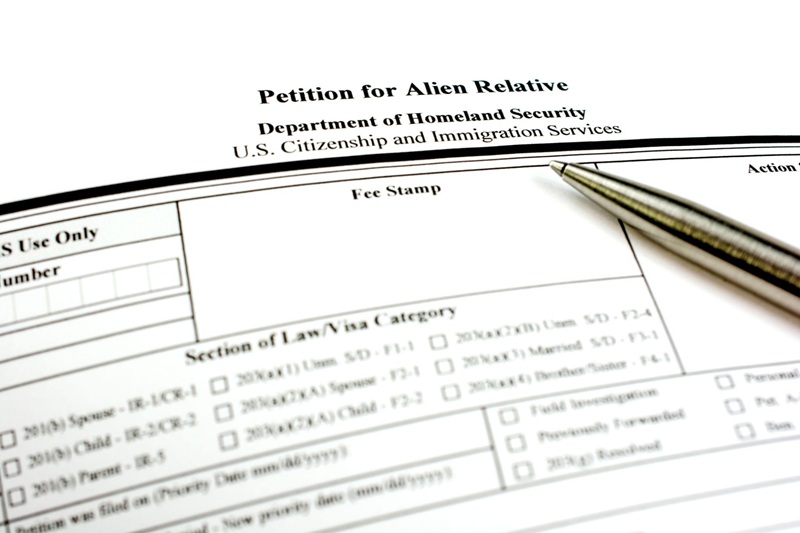
The Family-Based Immigration Process remains one of the most important pathways for individuals seeking lawful permanent residence in the United States. Through family sponsorship, eligible U.S. citizens and lawful permanent residents can help certain relatives obtain immigration benefits and, in many cases, permanent resident status.
As of February 2024, family-based immigration continues to play a central role in the U.S. immigration system. Understanding eligibility requirements, sponsorship obligations, and application procedures can help families navigate the process more effectively.
What Is Family-Based Immigration?
Family-based immigration allows eligible individuals in the United States to petition for qualifying relatives to immigrate legally.
The process is designed to promote family reunification and provide immigration opportunities for close family members of U.S. citizens and lawful permanent residents.
Successful applicants may eventually receive a Green Card, granting lawful permanent resident status in the United States.
Who Can Sponsor Family Members?
Two primary groups may sponsor eligible relatives:
U.S. Citizens
U.S. citizens generally have the broadest sponsorship rights and may petition for:
- Spouses.
- Children.
- Parents.
- Brothers and sisters.
Certain relatives may qualify as immediate relatives, often benefiting from more favorable immigration processing.
Lawful Permanent Residents
Green Card holders may sponsor:
- Spouses.
- Unmarried children.
However, lawful permanent residents typically face more restrictions than U.S. citizens regarding sponsorship eligibility.
Immediate Relative Categories
Immediate relatives of U.S. citizens receive special treatment under immigration law because they are not subject to annual visa caps.
Immediate relatives generally include:
- Spouses of U.S. citizens.
- Unmarried children under 21 of U.S. citizens.
- Parents of U.S. citizens who are at least 21 years old.
These categories often experience shorter waiting periods than preference-based immigration categories.
Immediate Relatives Account for Most Family Green Cards
Government statistics show that spouses, parents, and minor children of U.S. citizens continue to make up the largest category of family-based immigrants.
Immediate relatives are exempt from annual numerical limits, which generally allows them to obtain permanent residence faster than applicants in preference categories.
Source
- DHS Lawful Permanent Resident Data:
https://www.dhs.gov/immigration-statistics/lawful-permanent-residents
Family Preference Categories
Certain relatives fall within family preference classifications that are subject to annual visa limitations.
Examples include:
First Preference (F1)
- Unmarried adult sons and daughters of U.S. citizens.
Second Preference (F2)
- Spouses of lawful permanent residents.
- Unmarried children of lawful permanent residents.
Third Preference (F3)
- Married sons and daughters of U.S. citizens.
Fourth Preference (F4)
- Brothers and sisters of adult U.S. citizens.
Because visa numbers are limited, waiting periods may vary significantly depending on the category and country of origin.
Step 1: Filing a Family Petition
The family-based immigration process typically begins when a qualified sponsor files a petition on behalf of an eligible relative.
The petition establishes:
- The family relationship.
- The sponsor’s immigration status.
- Basic eligibility requirements.
Supporting documentation often includes birth certificates, marriage certificates, and proof of citizenship or lawful permanent residence.
Step 2: Visa Availability
For family preference categories, applicants must generally wait until an immigrant visa becomes available.
Visa availability is influenced by:
- Annual visa limits.
- Immigration category.
- Country-specific demand.
Applicants often monitor visa availability through government-published visa bulletin updates.
Ongoing Visa Backlogs Create Long Wait Times
Although immediate relatives are not subject to annual caps, family preference categories remain limited by statute.
For FY 2024, family-sponsored preference immigrants were subject to an annual worldwide limit of 226,000 visas.
Applicants from countries with high demand, including India, Mexico, China, and the Philippines, often face significant waiting periods because visa numbers are allocated according to priority dates.
Source
- Department of State Visa Bulletin:
https://travel.state.gov/content/travel/en/legal/visa-law0/visa-bulletin.html
Step 3: Adjustment of Status or Consular Processing
After a visa becomes available, eligible applicants typically proceed through one of two pathways.
Adjustment of Status
Individuals already present in the United States may qualify to apply for permanent residence without leaving the country.
Consular Processing
Applicants residing abroad generally complete the immigration process through a U.S. embassy or consulate.
The appropriate option depends on the applicant’s circumstances and eligibility.
Financial Sponsorship Requirements
Sponsors are generally required to demonstrate the ability to financially support the immigrant relative.
This requirement helps ensure that the applicant is unlikely to become dependent on public assistance.
Sponsors may need to provide:
- Income documentation.
- Tax records.
- Employment verification.
- Financial affidavits.
In some cases, a joint sponsor may assist in meeting financial requirements.
Required Documentation
Family-based immigration applications often require extensive documentation.
Common examples include:
- Passports.
- Birth certificates.
- Marriage certificates.
- Divorce decrees when applicable.
- Financial records.
- Immigration forms.
- Identity documents.
Providing complete and accurate documentation can help avoid delays.
Common Challenges in Family-Based Immigration Cases
Applicants and sponsors may encounter challenges such as:
Processing Delays
High application volumes can contribute to longer processing times.
USCIS Reported Improvements in Processing Efficiency
According to USCIS, the agency reduced its overall pending caseload during fiscal year 2023 while completing a record number of cases.
USCIS completed more than 10 million applications and petitions during FY 2023 and reduced the total backlog by approximately 15% compared with the previous year.
These improvements have helped shorten processing times for some family-based immigration cases.
Source
Documentation Issues
Missing or inconsistent records may result in requests for additional evidence.
Eligibility Questions
Complex family relationships or immigration histories may require additional review.
Visa Backlogs
Some family preference categories experience lengthy waiting periods because of annual visa limitations.
Case Study: Family Preference Visa Waiting Periods
The Department of State’s Visa Bulletin throughout 2024 showed continued backlogs in several family preference categories. Demand for available visa numbers exceeded statutory limits, resulting in prolonged waiting periods for many applicants.
These delays particularly affected:
- F1 (Unmarried adult children of U.S. citizens)
- F3 (Married sons and daughters of U.S. citizens)
- F4 (Brothers and sisters of U.S. citizens)
By contrast, immediate relatives of U.S. citizens generally remained exempt from these numerical limitations.
Source
- Visa Bulletin Archive:
https://travel.state.gov/content/travel/en/legal/visa-law0/visa-bulletin.html
Benefits of Family-Based Immigration
Family sponsorship provides several important advantages.
Successful applicants may gain:
- Lawful permanent residence.
- Authorization to live permanently in the United States.
- Employment opportunities.
- Greater family stability.
- A potential pathway to U.S. citizenship.
These benefits make family-based immigration one of the most significant legal immigration pathways available.
Family-Based Immigration by the Numbers
According to the U.S. Department of Homeland Security’s Yearbook of Immigration Statistics, family-sponsored immigration remains the largest avenue for obtaining lawful permanent residence in the United States.
- FY 2022: 180,030 family-sponsored immigrants received lawful permanent resident status.
- FY 2023: 226,660 family-sponsored immigrants became lawful permanent residents.
This represented an increase of approximately 26% compared with the previous year, illustrating the continued importance of family reunification within the U.S. immigration system.
Source
- DHS Yearbook of Immigration Statistics:
https://www.dhs.gov/immigration-statistics/yearbook
Tips for a Successful Application
Families can improve their chances of a smooth process by:
- Submitting accurate information.
- Maintaining organized records.
- Responding promptly to agency requests.
- Monitoring application status regularly.
- Seeking professional legal guidance when appropriate.
Preparation and attention to detail are often critical to successful outcomes.
Research Shows Family Reunification Remains the Foundation of Legal Immigration
Research from the Pew Research Center indicates that family-sponsored immigration has historically represented the largest share of legal immigration to the United States.
For decades, family reunification policies have served as one of the principal mechanisms through which immigrants obtain lawful permanent residence and eventually pursue U.S. citizenship.
Source
- Pew Research Center:
https://www.pewresearch.org/short-reads/2023/09/27/key-facts-about-us-immigrants/USCIS Expanded Online Filing Capabilities
In 2024, USCIS continued expanding digital services and online filing options to improve efficiency and reduce processing delays. The agency has emphasized modernization initiatives designed to streamline immigration applications and improve customer service.
These efforts are intended to enhance accessibility and shorten adjudication times for certain benefit requests.
Source
- USCIS Newsroom:
https://www.uscis.gov/newsroomCongressional Research Service Analysis
According to the Congressional Research Service, family-sponsored immigration has historically accounted for approximately two-thirds of all lawful permanent admissions to the United States.
The report emphasizes that family reunification has been a cornerstone of U.S. immigration policy since the enactment of the Immigration and Nationality Act of 1965.
Source
- Congressional Research Service:
https://crsreports.congress.gov/
Conclusion
The Family-Based Immigration Process continues to provide an essential pathway for family reunification in the United States as of February 2024. Whether through immediate relative categories or family preference classifications, eligible U.S. citizens and lawful permanent residents can help qualifying relatives pursue permanent residency.
Because immigration laws and procedures can be complex, applicants should carefully review eligibility requirements and ensure that all documentation is complete before beginning the process.