
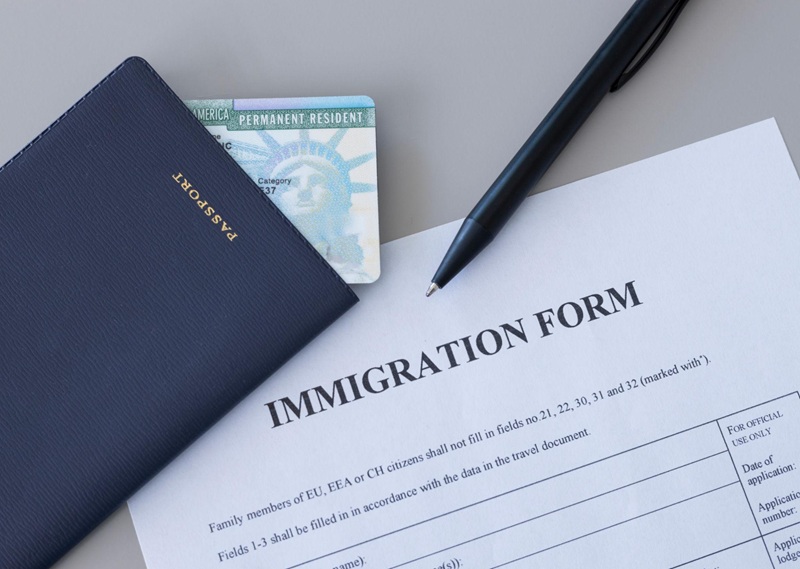
Obtaining lawful permanent resident status, commonly known as a Green Card, is a significant step for individuals seeking to live and work permanently in the United States. This Green Card Eligibility Guide explains the primary pathways available as of February 2024 and provides an overview of eligibility requirements under U.S. immigration law.
A Green Card grants foreign nationals the legal right to reside permanently in the United States and may eventually create a pathway toward U.S. citizenship for eligible individuals.
Understanding the available categories can help applicants determine the most appropriate immigration option for their circumstances.
What Is a Green Card?
A Green Card is official evidence of lawful permanent resident status in the United States. Green Card holders generally have the right to:
- Live permanently in the United States.
- Work for most employers.
- Travel internationally subject to immigration requirements.
- Sponsor certain family members for immigration benefits.
- Apply for U.S. citizenship if eligible.
Permanent residency does not provide all the rights of citizenship, but it offers substantial legal protections and opportunities.
Permanent Residents Continue to Play a Major Role in U.S. Immigration
According to the Department of Homeland Security, approximately 1.02 million individuals obtained lawful permanent resident status during fiscal year 2022, illustrating the continued importance of permanent immigration pathways in the United States.
Source
Department of Homeland Security, Office of Immigration Statistics
Main Green Card Eligibility Categories
Several immigration pathways may qualify an individual for lawful permanent residence.
Family-Based Green Cards
Family sponsorship remains one of the most common routes to obtaining a Green Card.
Eligible sponsors may include:
- U.S. citizens.
- Lawful permanent residents.
Family-based categories often include:
- Spouses.
- Children.
- Parents of U.S. citizens.
- Siblings of U.S. citizens.
Immediate relatives of U.S. citizens generally receive favorable immigration treatment compared to preference-based categories.
Family Sponsorship Remains the Largest Immigration Category
According to the Department of Homeland Security, family-sponsored immigration has historically represented the largest category of lawful permanent residency approvals. Immediate relatives of U.S. citizens generally receive visas without annual numerical limits, while preference-based family categories are subject to yearly quotas and waiting periods.
Source
Congressional Research Service
Department of Homeland Security
Employment-Based Green Cards
Many foreign nationals qualify for permanent residency through employment opportunities.
Employment-based categories may include:
Priority Workers
Individuals with extraordinary abilities, outstanding achievements, or executive-level experience may qualify under priority worker classifications.
Professionals With Advanced Degrees
Applicants possessing advanced educational qualifications or exceptional abilities may qualify under specific employment-based categories.
Skilled Workers and Professionals
Many workers receive employer sponsorship based on labor market needs and occupational qualifications.
Employment-based immigration often involves employer sponsorship and compliance with federal labor certification requirements.
USCIS Processing Improvements
In January 2024, U.S. Citizenship and Immigration Services (USCIS) announced that it had reduced backlogs and improved processing efficiency through expanded digitization efforts and policy modernization initiatives. The agency reported completing more than 10 million cases during fiscal year 2023, a record level of case processing.
Source
USCIS News Release
Refugee and Asylee Eligibility
Individuals granted refugee or asylum status in the United States may become eligible to apply for permanent residence after meeting applicable requirements.
These protections are generally available to individuals who cannot safely return to their home countries because of persecution or a well-founded fear of persecution.
Diversity Visa Program
The annual Diversity Visa Program provides immigration opportunities for eligible individuals from countries with historically lower rates of immigration to the United States.
Applicants must satisfy eligibility requirements related to:
- Country of birth.
- Educational qualifications.
- Work experience.
Selection through the Diversity Visa lottery does not automatically guarantee permanent residency but may provide an opportunity to pursue a Green Card.
Diversity Visa Program Continues in Fiscal Year 2024
The Department of State continued administering the Diversity Visa Program for fiscal year 2024, making up to 55,000 immigrant visas available annually to applicants from countries with historically low rates of immigration to the United States.
Source
U.S. Department of State
Special Immigrant Categories
Certain individuals may qualify under specialized immigration classifications.
Examples may include:
- Religious workers.
- Certain international organization employees.
- Special immigrant juveniles.
- Afghan and Iraqi nationals qualifying under specific programs.
Eligibility requirements vary significantly depending on the category.
Humanitarian-Based Eligibility
U.S. immigration law includes humanitarian provisions that may provide pathways to permanent residence for eligible individuals.
These may include:
- Refugees.
- Asylees.
- Certain victims of crime.
- Certain victims of human trafficking.
- Individuals protected under special humanitarian programs.
Applicants should carefully review eligibility requirements before pursuing these options.
Refugees and Asylees May Apply for Permanent Residence
Under U.S. immigration law, refugees are generally required to apply for lawful permanent residence after one year in the United States, while individuals granted asylum may become eligible to apply after maintaining asylum status for one year.
Source
USCIS
General Green Card Requirements
Although requirements differ by category, applicants commonly must:
- Meet eligibility criteria for a qualifying category.
- Submit required immigration forms.
- Complete background checks.
- Provide supporting documentation.
- Attend bio-metrics appointments when required.
- Demonstrate admissibility under U.S. immigration laws.
Additional requirements may apply depending on the immigration pathway.
Common Grounds of Inadmissibility
Some applicants may face barriers to obtaining permanent residency.
Potential issues can include:
- Certain criminal convictions.
- Immigration violations.
- Fraud or misrepresentation.
- Public health concerns.
- National security considerations.
In some situations, waivers may be available.
Public Charge Rule Update
In 2022, the Department of Homeland Security implemented a final rule clarifying how immigration officials evaluate public charge determinations. The rule remained in effect as of February 2024 and identified factors considered when assessing whether an applicant is likely to become primarily dependent on government assistance.
Source
USCIS
Adjustment of Status vs. Consular Processing
Eligible applicants may obtain permanent residency through one of two primary procedures:
Adjustment of Status
Individuals already present in the United States may be able to apply for permanent residence without leaving the country.
Consular Processing
Applicants outside the United States typically complete the immigration process through a U.S. embassy or consulate abroad.
The appropriate procedure depends on the applicant’s circumstances and immigration category.
USCIS Encouraged Early Filing
USCIS encouraged eligible applicants to monitor the monthly Visa Bulletin and file adjustment-of-status applications as soon as visa numbers became available. Visa availability often varies by category and country of chargeability.
Sources
USCIS
U.S. Department of State Visa Bulletin
Benefits of Lawful Permanent Residence
Green Card holders generally enjoy several important benefits:
- Permanent residence authorization.
- Broad employment opportunities.
- Access to certain public benefits when eligible.
- Ability to sponsor qualifying family members.
- Potential pathway to U.S. citizenship.
Maintaining lawful permanent resident status requires compliance with immigration laws and residency obligations.
Pathway to Citizenship
According to USCIS, many Green Card holders become eligible to apply for U.S. citizenship after maintaining lawful permanent resident status for five years, provided they satisfy residency, physical presence, and other statutory requirements.
Source
USCIS
Immigration Backlogs Continue to Affect Applicants
Despite improvements in processing times, visa backlogs continued to affect many immigration categories entering 2024. Applicants in certain family-based and employment-based preference categories often faced extended waiting periods due to annual visa limits and country-specific demand.
Sources
Congressional Research Service
Department of State Visa Bulletin
Preparing a Strong Green Card Application
Applicants can improve the efficiency of the process by:
- Gathering supporting documentation early.
- Reviewing eligibility requirements carefully.
- Responding promptly to agency requests.
- Maintaining accurate records.
- Seeking qualified legal guidance when necessary.
Immigration procedures can be complex, making careful preparation essential.
USCIS Continued Modernization Efforts in 2024
USCIS entered 2024 with ongoing initiatives aimed at reducing processing delays, expanding online filing systems, and improving customer service. According to the agency, record-breaking case completions in fiscal year 2023 contributed to shorter wait times for many immigration benefits and applications.
Source
USCIS News Release
Conclusion
This Green Card Eligibility Guide provides an overview of the primary pathways to lawful permanent residence in the United States as of February 2024. Family sponsorship, employment opportunities, humanitarian protections, and special immigrant categories continue to offer potential routes to obtaining a Green Card.
Because immigration laws and procedures can be highly complex, applicants should carefully evaluate their eligibility and stay informed about current legal requirements before beginning the application process.